
Why Oxygenation Became Part of My Daily Routine
Oxygen is one of the most basic requirements for human life, but most of us rarely think about what happens after we take a breath.
Your lungs have to bring oxygen in. Your red blood cells have to carry it. Your heart and blood vessels have to circulate it. Your tissues have to receive it. Then your mitochondria use that oxygen to produce ATP, the energy your cells need to function.
If any part of that system isn't working well, oxygen delivery or utilization can suffer.
That's why I think about oxygenation as much more than breathing. It's the entire process of getting oxygen from the air into the cells and having healthy mitochondria capable of using it.
After my cancer diagnosis, that became one of the five pillars of my approach.
What Warburg Discovered About Cancer Metabolism
One of the scientists who helped shape our understanding of cellular respiration was Otto Warburg, who won the Nobel Prize in Physiology or Medicine in 1931.
Warburg later spent decades studying cancer and observed something that remains important today. Many cancer cells produce energy differently than healthy cells, relying heavily on glucose and glycolysis even when oxygen is available. We now call this the Warburg effect.
We have learned a tremendous amount since Warburg, and cancer metabolism is far more complex than one pathway. But altered metabolism is now recognized as one of the hallmarks of cancer.
We also know that many solid tumors develop areas of low oxygen called hypoxia. Hypoxia can activate signals that help cancer cells adapt, change their metabolism, stimulate new blood-vessel formation, and in some cancers contribute to treatment resistance.
That's why I think the statement "cancer can't live in oxygen" oversimplifies the science.
The bigger lesson is much more useful: oxygen, circulation, mitochondrial function, and cellular metabolism are deeply connected.
Those are things I want working well.
Start With the Basics of Oxygen Delivery
Before we talk about a hyperbaric chamber, make sure your body can actually transport and use oxygen effectively.
Hemoglobin carries oxygen through the blood. Nutrients including iron, vitamin B12, and folate are important for healthy red blood cell production. If someone is anemic or has inadequate hemoglobin, oxygen delivery can be affected regardless of how deeply they breathe.
Then there's circulation. Oxygen-rich blood still has to reach your tissues. Movement, cardiovascular fitness, hydration, vascular health, and blood flow all become part of the equation.
And finally, the mitochondria have to use that oxygen.
That's why oxygenation overlaps with so many of the other things I focus on. You can't separate oxygen from nutrition, circulation, movement, and mitochondrial health.
Movement Is One of the Best Ways to Improve Oxygen Utilization
One of the simplest things you can do for oxygenation is move your body.
When you walk, lift weights, or perform cardiovascular exercise, your muscles demand more oxygen. Your heart pumps more blood, circulation increases, and your mitochondria have to become better at producing energy.
Walking is one of the simplest ways I work on that, and I regularly incorporate short walks after meals along with other forms of movement.
Why Hyperbaric Oxygen Is Different
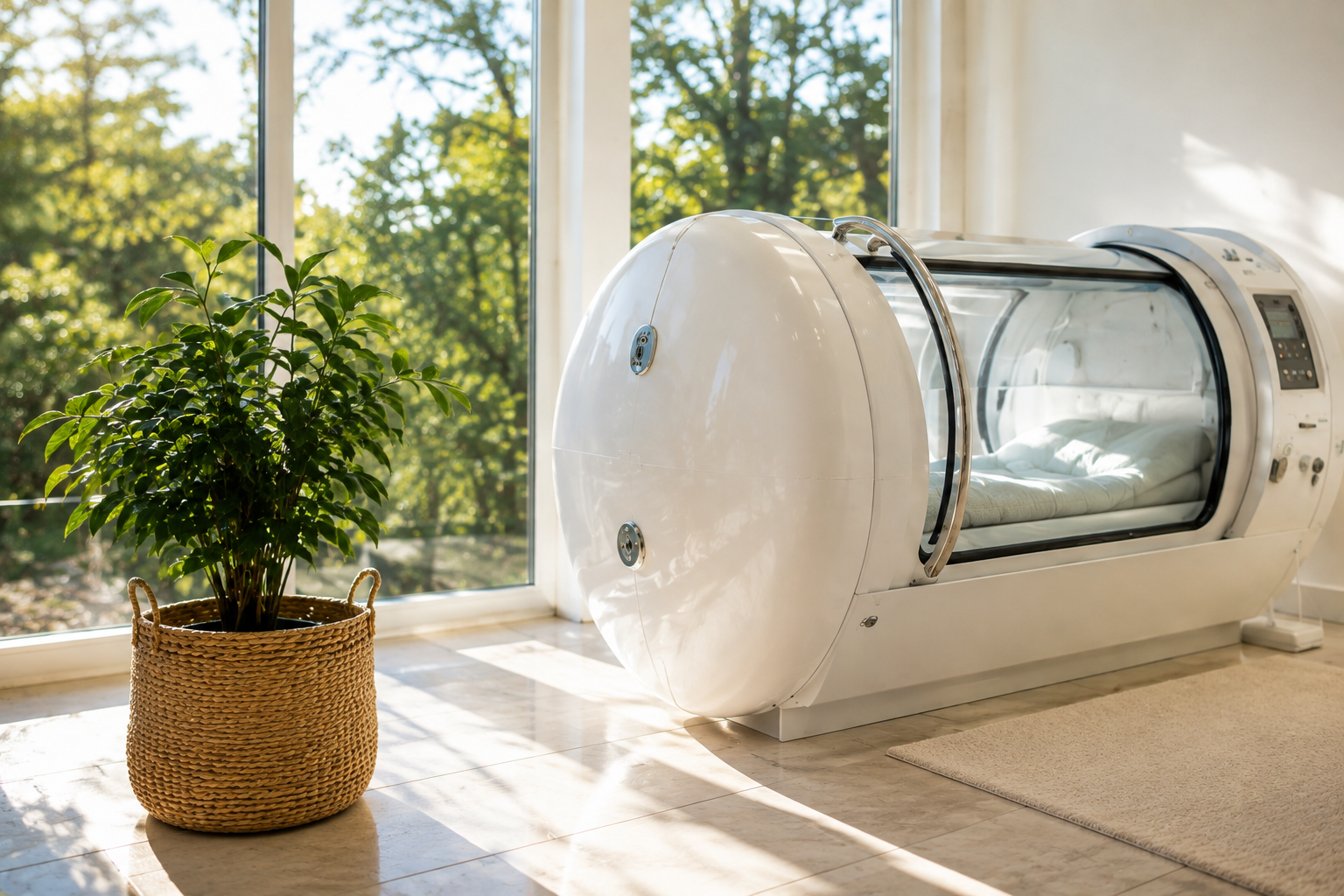
Hyperbaric oxygen therapy, or HBOT, takes oxygenation to a completely different level and has been one of the most important modalities I've used throughout my journey.
A hyperbaric chamber combines oxygen with increased atmospheric pressure.
That pressure is what makes it different.
Normally, almost all of the oxygen in your blood is carried by hemoglobin. Under hyperbaric conditions, the increased pressure allows substantially more oxygen to dissolve directly into the plasma, dramatically increasing the amount of dissolved oxygen available to tissues.
That's why hyperbaric oxygen isn't some fringe wellness treatment. It's an established medical therapy used for conditions including certain non-healing wounds, radiation tissue injury, carbon monoxide poisoning, decompression sickness, and other recognized indications.
It's also why you now see hyperbaric chambers in many integrative health clinics, neurological and rehabilitation centers, sports-recovery facilities, and longevity practices. Beyond its established medical indications, researchers continue to investigate HBOT in areas involving inflammation, neurological recovery, tissue repair, vascular function, and regenerative signaling.
I personally used HBOT multiple times per week throughout most of my cancer journey.
For me, the concept is straightforward: I'm creating a temporary environment where significantly more oxygen can be delivered to tissues than normal breathing can provide.
Why Healing Requires Oxygen
There's another reason oxygenation matters so much to me: damaged tissue needs oxygen to heal.
Wound healing requires energy. Building collagen requires oxygen. Immune cells require energy and oxygen to perform many of their normal functions. New blood vessels need to form when damaged tissue is being repaired.
This is one of the reasons hyperbaric oxygen has an established role in certain difficult-to-heal wounds and radiation injuries.
It also shows why angiogenesis needs to be understood in context.
In my article on diet, I talk about anti-angiogenesis because tumors can hijack blood-vessel formation to support their own growth. But when healthy tissue has been damaged, forming healthy new blood vessels is part of normal repair.
The body doesn't have "good pathways" and "bad pathways." Context matters.
EWOT Combines Oxygen With Demand
I've also incorporated Exercise With Oxygen Therapy, or EWOT.
The idea is much simpler than the name.
You exercise while breathing oxygen-enriched air.
Exercise creates demand. Your muscles need more oxygen, your heart pumps harder, and blood flow increases. At the same time, you're increasing the oxygen available to breathe.
That's what attracted me to EWOT.
HBOT uses pressure to dramatically increase dissolved oxygen. EWOT takes a different approach by combining supplemental oxygen with movement, circulation, and metabolic demand.
I use both, but for different reasons.
Breathing Still Matters
We also shouldn't overlook something we do roughly 20,000 times every day: breathe.
Good breathing isn't about constantly taking enormous breaths. Oxygen delivery depends on the interaction between oxygen, carbon dioxide, hemoglobin, circulation, and cellular demand.
Carbon dioxide actually helps influence how readily hemoglobin releases oxygen into your tissues through something called the Bohr effect.
That's one reason slow, controlled breathing and good respiratory mechanics matter more than simply trying to inhale as much air as possible.
Again, oxygenation is a system.
How I Would Start
If someone wanted to improve oxygenation, I wouldn't tell them the first thing they need is a hyperbaric chamber.
Start with what your body does every day.
Move. Walk. Build cardiovascular fitness. Get outside. Breathe well. Stay hydrated. Support healthy red blood cells. Make sure you're getting adequate iron, B12, folate, and the other nutrients involved in oxygen transport and mitochondrial function.
Then you can become more targeted.
That's where tools such as hyperbaric oxygen and EWOT have become valuable parts of my own routine.
I don't think oxygenation is about chasing "more oxygen" everywhere you can get it. It's about making the entire system work better.
Bring oxygen in. Carry it well. Circulate it well. Deliver it to the tissues. Use it efficiently.
That's what oxygenation means to me, and that's why it remains one of the foundational pillars of how I approach my health.
FAQs
Straight answers about the book, the protocols, and the path forward.
Everything I share comes from a combination of my personal experience, more than 20 years working in health and wellness, and the research I've done throughout my own cancer journey. I've used many of the foods, supplements, therapies, and strategies I write about personally, but my approach has continued to evolve as I've learned more and as my own health has changed.
I don't believe everyone should simply copy what I did. Cancer isn't one disease, and two people with the same diagnosis can have very different health histories, nutritional needs, genetics, treatments, and overall terrain. My goal is to show you what I did, explain the science and thinking behind it, and help you ask better questions about what may make sense for you.
The Five Pillars are Faith, Diet, Supplementation, Detoxification, and Oxygenation. They became the framework I used to organize the major areas I focused on throughout my journey. Faith is the foundation underneath all of them, while the other four focus on supporting the environment, or terrain, in which my body and cells are functioning every day.
Your terrain is the internal environment your cells live in. It includes things like nutrient status, metabolic health, inflammation, blood sugar, immune function, circulation, gut health, sleep, stress, and environmental exposures.
I don't believe complex health can be understood by looking at one symptom or one lab result in isolation. That's why I look at the whole person and how these systems interact. It's also the philosophy behind Be Resilient, where comprehensive testing is used to identify patterns and build a more personalized terrain approach around the individual.
No. I share what I've personally done, what I've learned, and the research behind the subjects I discuss so you can become more informed about your health. This information isn't a substitute for individualized medical care, and decisions involving a diagnosis, medication, treatment, or major change to your health plan should be discussed with qualified healthcare professionals who understand your individual situation.
I believe you should learn as much as you can, ask good questions, seek wise counsel, pray about your decisions, and take an active role in your own health.
Still have questions?
Reach out directly. The mission is too important for confusion.