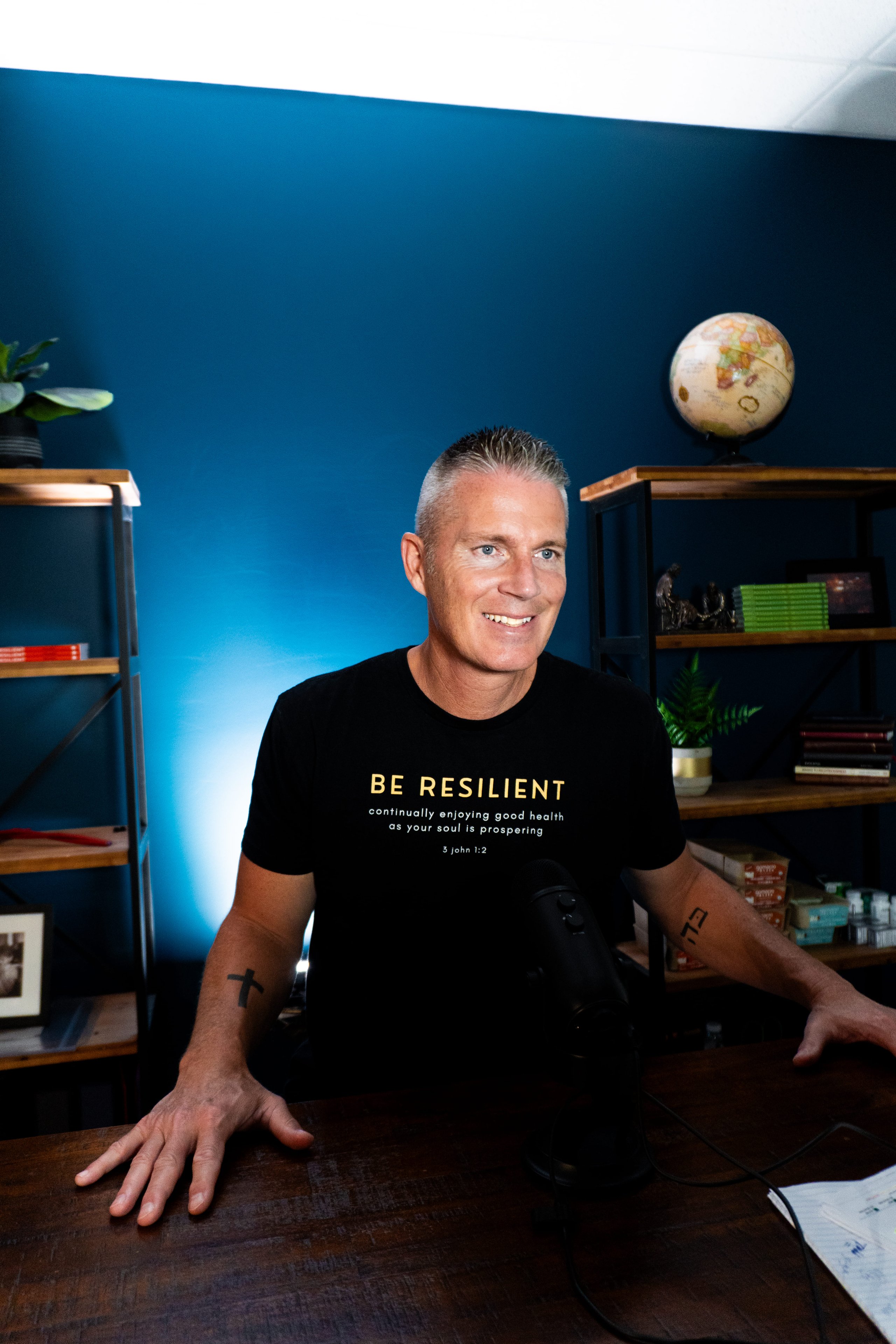
Be Resilient
A personalized approach to understanding and supporting your terrain
When I was diagnosed with cancer, I began looking at health through an entirely different lens.
I had spent years studying functional and integrative health, but suddenly the questions I had been asking for other people became personal. What was happening inside my body? Where was I vulnerable? What could I change? And how could I use the information available to me to make better decisions moving forward?
That experience reinforced something I believe deeply today: complex health cannot be understood through a single symptom, test result, or standardized protocol.
That philosophy is at the heart of Be Resilient.
Looking Beyond a Single Number
Modern testing can give us an extraordinary amount of information. The challenge is that information without context isn't necessarily useful.
A nutrient level, inflammatory marker, genetic variant or food response may tell us something, but none of those things exists in isolation. They are pieces of a much larger picture.
Be Resilient takes a terrain-based, systems-oriented approach that brings together comprehensive laboratory data, health history, nutrition, lifestyle and ongoing support to identify meaningful patterns, establish priorities and build a personalized support plan that can evolve with the individual.
The differentiator isn't how many things we test.
It's what we do with the information and how we use it to understand and support the individual's terrain.
What Do We Mean by "Terrain"?
I often describe terrain as the internal environment in which your cells are living every day.
Nutrition, metabolic health, nutrient status, inflammation, sleep, stress, movement, environmental exposures and other factors can all influence normal physiology. Rather than looking at each of these independently, we want to understand how they may interact.
That is why Be Resilient isn't built around giving everyone the same list of supplements or the same diet. We gather information, look for patterns and use those findings to help determine where attention may be most valuable.
From Data to a Plan
One of the biggest problems I see in health today is that people accumulate information without knowing what to do with it.
They have lab reports, supplements, diets, podcasts, books and recommendations coming from every direction. Eventually, more information can create more confusion.
Be Resilient is designed to bring those pieces together.
Testing gives us data. Health history gives that data context. Practitioners help interpret the patterns. Then education and ongoing support help turn those findings into practical priorities that can change as the individual changes.
My own journey made this philosophy more important to me than ever. I didn't want to be a passive observer of my health. I wanted to understand as much as I could, and become intentional about the environment I was creating inside my body.
That's what Be Resilient is about.
If you'd like to learn more about Be Resilient, our testing and our approach to personalized health, click below.